Pediatric Stroke Awareness: The Time is Now!
The AHA/ASA 2026 Guideline for the Early Management of Patients With Acute Ischemic Stroke introduced pediatric stroke recommendations for the first time, outlining the evolving field of pediatric care. We invited Dr. Lori Jordan, Pediatric Stroke Neurologist, Vanderbilt University Medical Center to explore the importance of building programs to recognize and treat pediatric stroke.
 A 16-year-old arrives in the Emergency Department. He is wide-eyed and looks distraught. He does not follow commands and does not answer questions. He appears agitated. A toxicology screen is sent. His STAT head CT is read as no abnormalities. Finally, it is recognized that he isn’t moving the right side of his body. A CT angiogram shows that he has an occlusion of his middle cerebral artery. Despite being among the top ten causes of death of children in the United States, pediatric stroke remains under-recognized, and diagnosis is often delayed, with a median time of 24 hours from symptom onset to diagnosis.1,2 Thus, most children are identified with stroke are outside the window for hyperacute interventions such as thrombectomy which has improved outcome in adults in multiple randomized clinical trials and has improved outcome in children in an international multicenter observational study.3
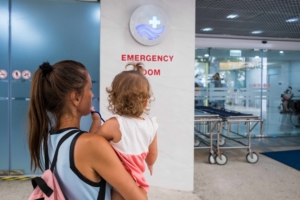
Most pediatric stroke patients are “walk-ins” to emergency rooms.
Given the scarcity of children’s medical centers with pediatric stroke expertise, it is essential for all hospitals, especially stroke centers, to be aware that stroke occurs in children and be ready to facilitate the diagnosis and treatment of children with acute stroke symptoms. Stroke in beyond the newborn period – age 17 ranges from 2/100,000 children per year overall to 1320/100,000 children with severe congenital heart disease per year.4,5 However, the fact that children may have strokes is not recognized by most health care workers. The American Heart Association (AHA) Statement on the Management of Stroke in Neonates and Children published in 20196 states that hospital should: “Establish systems and pathways for hyperacute pediatric stroke care…Establish referral networks connecting community hospitals and frontline providers to tertiary care pediatric stroke centers with specifically trained experts and technology in vascular neurology, neuroimaging, and neurocritical care.” Implementation of this recommendation has not occurred. This recommendation has been strengthened in the AHA 2026 Early Management of Patients with Acute Ischemic Stroke Guideline7 which recommends thrombectomy evaluation for children with large vessel occlusion especially those aged 6 and older.
What can we do?
Stroke centers and stroke coordinators can educate their staff so that if a child appears to be having a stroke, they receive care with the same level of urgency that an adult with stroke would receive. Depending on the center’s resources, they may feel they can complete imaging on children prior to transfer, or they may simply educate their staff to recognize symptoms of possible stroke in children and have pre-established pathways for rapid transfer to an appropriate children’s medical center with stroke capabilities.
The teen mentioned above fortunately did have his stroke recognized rapidly enough to undergo a thrombectomy and make a full recovery. But there are many examples that are not as upbeat. Young people with stroke are left with decades of life with disabilities if the stroke is not recognized. Now is the time! The International Pediatric Stroke Organization has great resources including a Pediatric Stroke Readiness Checklist and video for EMS and ED providers. https://internationalpediatricstroke.org/pediatric-stroke-resources/
 Lori Jordan, MD, PhD
Director, Pediatric Stroke Program
Monroe Carell Jr. Children’s Hospital at Vanderbilt
Vanderbilt Health
Nashville, TN
Disclosure: Treasurer, International Pediatric Stroke Organization
Lori Jordan, MD, PhD is Professor of Pediatrics, Neurology, and Radiology at Vanderbilt University Medical Center in Nashville, TN. She completed residency in Pediatrics and Child Neurology followed by a fellowship in Vascular Neurology (Stroke) at the Johns Hopkins Hospital in Baltimore. With a multidisciplinary team, she developed an acute stroke team for children at Vanderbilt. She and her team have evaluated more than 1,000 children with a “Code Stroke.” She is also a member of the board of directors of the International Pediatric Stroke Organization.
References:
- Rafay MF, Pontigon AM, Chiang J, et al. Delay to diagnosis in acute pediatric arterial ischemic stroke. Stroke. Jan 2009;40(1):58-64. doi:10.1161/STROKEAHA.108.519066
- Mallick AA, Ganesan V, Kirkham FJ, et al. Diagnostic delays in paediatric stroke. J Neurol Neurosurg Psychiatry. Aug 2015;86(8):917-21. doi:10.1136/jnnp-2014-309188
- Sporns PB, Bhatia K, Abruzzo T, et al. Endovascular thrombectomy for childhood stroke (Save ChildS Pro): an international, multicentre, prospective registry study. Lancet Child Adolesc Health. Dec 2024;8(12):882-890. doi:10.1016/S2352-4642(24)00233-5
- Agrawal N, Johnston SC, Wu YW, Sidney S, Fullerton HJ. Imaging data reveal a higher pediatric stroke incidence than prior US estimates. Stroke. Nov 2009;40(11):3415-21. doi:10.1161/STROKEAHA.109.564633
- Hoffman JL, Mack GK, Minich LL, et al. Failure to impact prevalence of arterial ischemic stroke in pediatric cardiac patients over three decades. Congenit Heart Dis. May-Jun 2011;6(3):211-8. doi:10.1111/j.1747-0803.2011.00510.x
- Ferriero DM, Fullerton HJ, Bernard TJ, et al. Management of Stroke in Neonates and Children: A Scientific Statement From the American Heart Association/American Stroke Association. Stroke. Mar 2019;50(3):e51-e96. doi:10.1161/STR.0000000000000183
- Prabhakaran S, Gonzalez NR, Zachrison KS, et al. 2026 Guideline for the Early Management of Patients With Acute Ischemic Stroke: A Guideline From the American Heart Association/American Stroke Association. Stroke. Jan 26 2026;doi:10.1161/STR.0000000000000513
_______________________________________________________________________________________________________________________________________________________